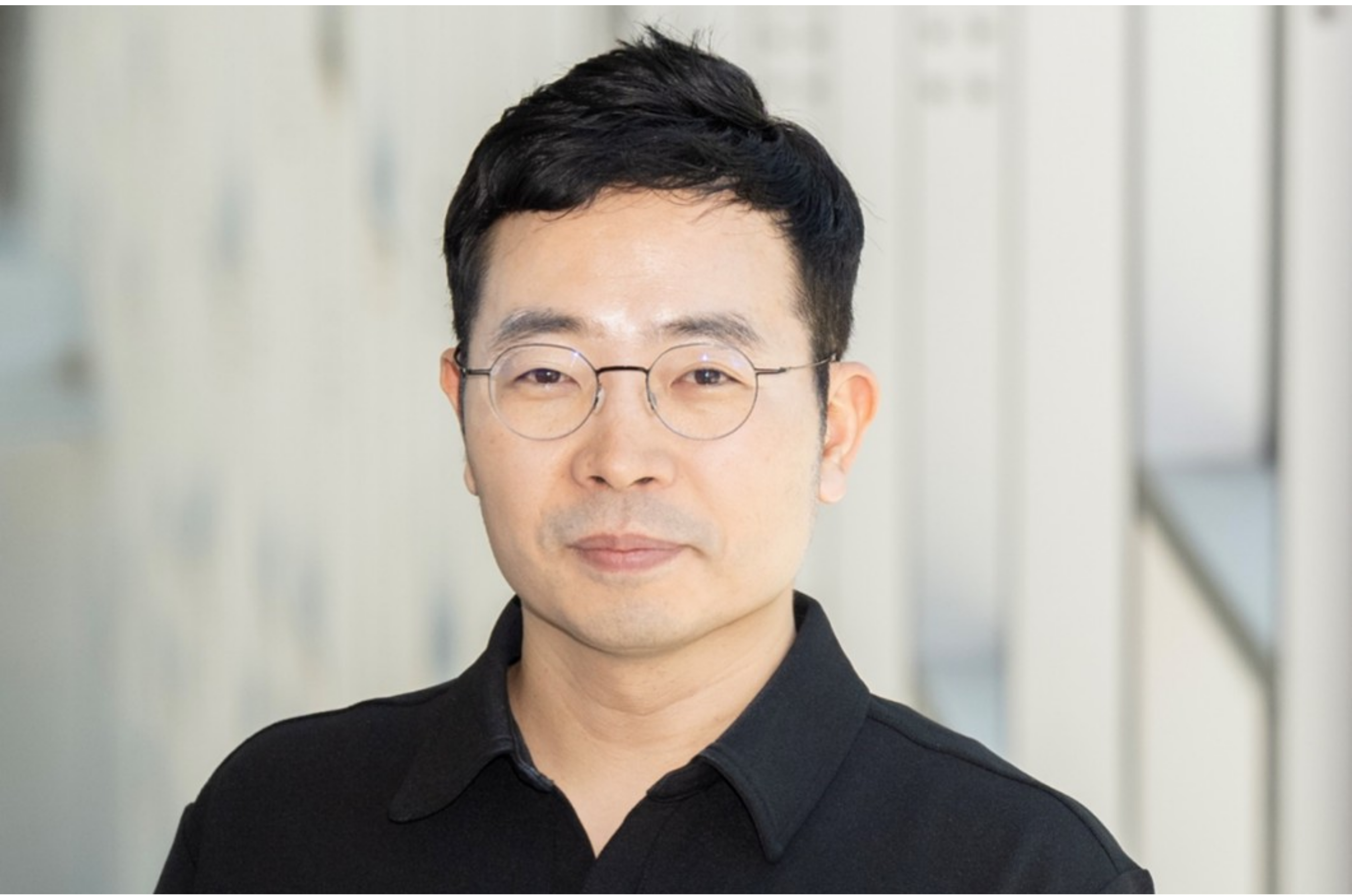
Changwon Park
Associate Professor
TG2 Leader
Changwon Park works in the field of computational condensed matter physics and materials science, focusing on first-principles calculations and large-scale numerical simulations to elucidate the origin of emergent large-scale orders such as charge density waves (CDWs), kagome metals, and moiré lattices. In particular, he has proposed a new approach that goes beyond conventional phenomenological theories by constructing first-principles–based interatomic potentials, enabling the direct calculation of structural phase transitions and thermodynamic behavior, including incommensurate CDWs. His research scope further extends to two-dimensional materials and heterointerfaces, topological electronic materials, and energy storage and conversion systems, where he performs computational materials discovery through database screening and element-substitution design strategies.
By integrating theory, computation, and large-scale parallel code development, he establishes a scalable research framework for computational materials science. To this end, he has developed high-precision potential-learning methods based on symmetrized bond-type basis functions, lattice Wannier function techniques for analyzing soft phonon modes, STM and TEM simulation codes, and large-scale diffusion Monte Carlo–type simulation tools. These methodologies enable simulations involving millions of atoms and provide quantitative insight into complex collective phenomena such as CDW domain formation, stacking correlations, and oxygen diffusion mechanisms.
Back to People
By integrating theory, computation, and large-scale parallel code development, he establishes a scalable research framework for computational materials science. To this end, he has developed high-precision potential-learning methods based on symmetrized bond-type basis functions, lattice Wannier function techniques for analyzing soft phonon modes, STM and TEM simulation codes, and large-scale diffusion Monte Carlo–type simulation tools. These methodologies enable simulations involving millions of atoms and provide quantitative insight into complex collective phenomena such as CDW domain formation, stacking correlations, and oxygen diffusion mechanisms.
Latest news
All news
Prof. Seongjae Cho Advances Core Technologies for High-Speed, Low-Power AI Semiconductors

Prof. Jonggeol Na and Prof. Hyeong Jun Kim's Joint Research Team Develops a Catalyst for PET Recycling

IMMS Prof. Woo-Jae Kim's Research Team Develop World-First Technology to Produce Clean Hydrogen Directly from Mixed Plastic Waste